
Solar parks as a new habitat: opportunities and challenges

What happens to nature when agricultural land becomes a solar park? Bionieuws, the Dutch professional magazine for biologists, explored the long-term ecological research being carried out by the University of Groningen with support from the Province of Groningen and Novar. The initial findings show clear opportunities, but also some important challenges.
A solar park changes more than the way an area generates energy. Between, beneath and around the panels, a landscape emerges with different conditions than before. More shade, changes in soil moisture and less disturbance create space for new combinations of plants and animals.
Ecologists therefore describe solar parks as a novel ecosystem: a new kind of habitat with its own conditions and mix of species.
In its April 2026 edition, Bionieuws took an in-depth look at this ‘nature between the panels’. The article looks at what researchers have found so far, where solar parks can support nature and where the limitations lie.
More species than on intensively managed reference plots
The initial findings show that the solar parks studied contain measurably more biodiversity than the intensively managed agricultural land used for comparison. Researchers found more species of plants, insects, mice and birds.
One reason for this difference is that no pesticides are used at the solar parks studied, the soil is not fertilised and there is less disturbance. The edges of the parks, the strips between the panels and other areas with rougher vegetation provide particularly valuable space for nature.
Conditions beneath the panels are different again. There is more shade and the soil often remains more humid. At the same time, the ground lacks features such as the humus layer found in woodland. Rather than recreating an existing natural habitat, solar parks therefore develop their own distinct communities of species.
Among ground beetles, for example, researchers have found combinations of species that would not normally occur together. From an ecological perspective, this makes a solar park a new type of habitat.
Not every species benefits
More biodiversity does not automatically mean that every species benefits.
Birds such as the white wagtail make use of solar parks. The picture is different for species associated with open agricultural landscapes. Skylarks, lapwings and yellow wagtails rarely breed in solar parks as they are generally designed today.
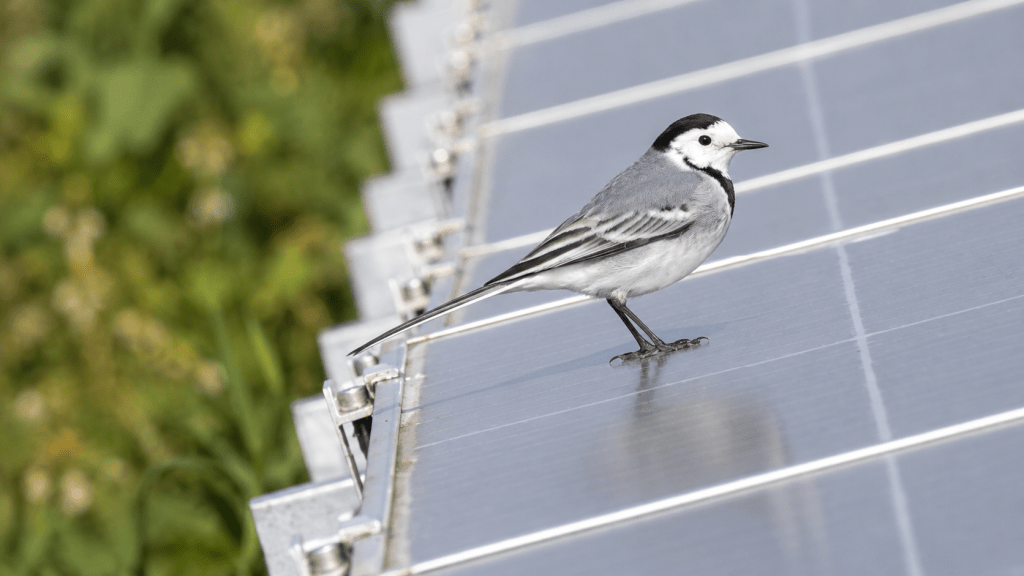
A gain for one species can therefore mean a loss for another. When agricultural land becomes a solar park, habitat also disappears for species that depend on an open landscape.
That is why the researchers look beyond the nature found within the boundaries of the solar park. The surrounding landscape matters too. Suitable plots for farmland birds, open spaces and nature zones can help compensate for the loss of existing habitat.
Ecological value cannot be reduced to a single score or success story. It requires choices that reflect the location and the species already present there.
Design and management make the difference
A solar park does not automatically become ecologically valuable. The distance between the panels, the space around the edges and the way vegetation is managed all help determine which species can establish themselves.
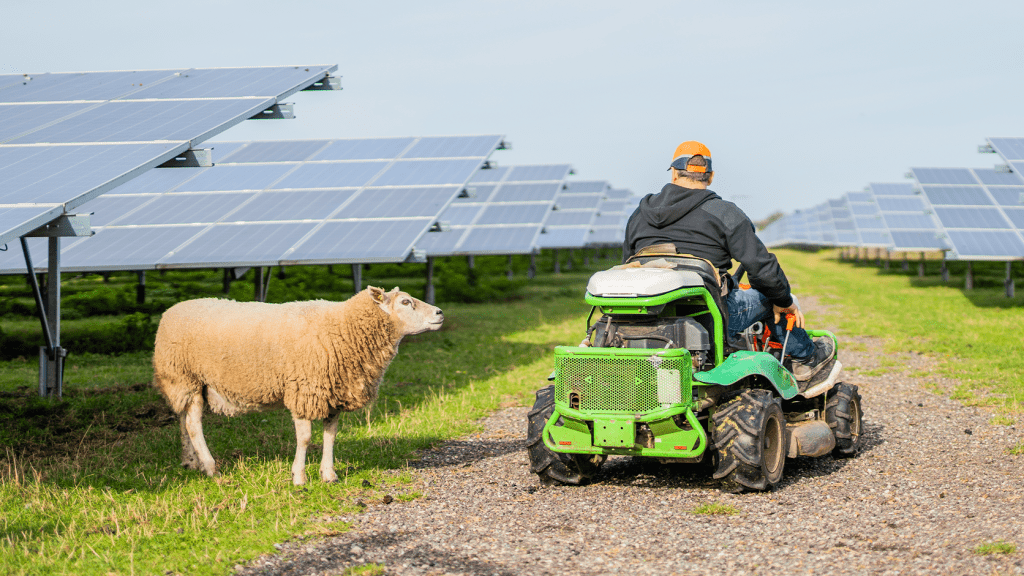
Mowing and removing the cuttings can reduce soil fertility and support the development of species-rich grassland. Targeted grazing can also help, but it requires a carefully considered management plan. Simply sowing a wildflower mix or placing a few sheep in the park does not automatically create ecological value.
Measuring before drawing conclusions
When the first large-scale solar parks were built, little long-term research was available on their ecological effects. The sector based many decisions on expectations, short-term measurements and general knowledge of nature management.
The five-year study provides a stronger foundation for decisions about design and management. For Novar, that means measuring which measures work, where they work and which species benefit from them. What works at one location will not necessarily work at another.
The initial findings provide direction, but the research is still ongoing. By collecting data over several years, researchers can see how vegetation and animal populations develop and determine which effects are temporary and which are long term.
From research to better solar parks
The energy transition requires space. At the same time, we must treat the natural environment and the landscapes in which we develop our projects with care.
These interests do not have to conflict, but bringing them together does not happen automatically. It requires knowledge, collaboration and a willingness to adapt established ways of working.
The University of Groningen’s research helps Novar and other organisations make better decisions—not on the basis of assumptions, but on what researchers actually observe in the field.
A solar park changes a landscape. That is why we need to look beyond the amount of energy it generates. The University of Groningen’s research shows where opportunities exist, where species may lose habitat and which choices make a real difference. We use that knowledge to design and manage future solar parks more effectively.
Source: Van Maanen, G. (2026). ‘Zonneparken vormen een nieuw habitat en strijdtoneel’ [Solar parks form a new habitat and battleground]. Bionieuws, April 2026, no. 4, pp. 26–29.